Friendly Staff! (503) 771-6701
How Can BMW Repair Diagnostics Identify Early Signs of Timing Chain and Valvetrain Problems?

How Do BMW Repair Technicians Diagnose CAN Bus Communication Problems?
November 3, 2026
Why Early Diagnosis Matters for BMW Engine Health
An unusual startup rattle, an unfamiliar engine noise, or a change in performance can leave BMW owners wondering whether something serious is developing beneath the hood. Timing chain and valvetrain problems can be especially concerning because certain failures may lead to extensive internal engine damage. Fortunately, specialized diagnostic techniques can help technicians investigate warning signs before a component fails completely.
At Steve’s Imports, experienced technicians provide BMW repair in Portland, using factory-specific diagnostic equipment, manufacturer software, and decades of hands-on experience to evaluate engine problems. Rather than recommending replacement parts based solely on a noise or fault code, the team focuses on identifying and confirming the underlying cause of the customer’s concern.
Understanding how these diagnostic procedures work can help BMW owners recognize when their vehicles need attention and why a thorough evaluation is often more valuable than guessing which component has failed.
Why Are Timing Chains and Valvetrain Components Important in BMW Engines?
The timing chain keeps the crankshaft and camshafts synchronized so the engine’s valves open and close at the proper intervals. Many BMW engines also use sophisticated variable valve timing systems to optimize performance, efficiency, and responsiveness.
Several components work together to maintain this synchronization, including the timing chain, guides, tensioners, camshaft sprockets, and associated control systems. Depending on the engine design, components such as BMW’s VANOS variable valve timing system also influence valve timing operation.
Although timing chains are designed for long-term durability, they are not immune to wear. Lubrication problems, aging components, tensioner concerns, and other mechanical conditions can affect their operation.
If excessive wear or a mechanical failure disrupts engine timing, the consequences can be significant. On interference-engine designs, a sufficiently severe timing failure may allow contact between pistons and valves, potentially causing extensive engine damage.
However, an unusual sound or timing-related fault code does not automatically mean the timing chain needs replacement. Different mechanical or electronic problems can create similar symptoms, making accurate diagnosis essential.
What Are the Early Warning Signs of BMW Timing Chain or Valvetrain Problems?
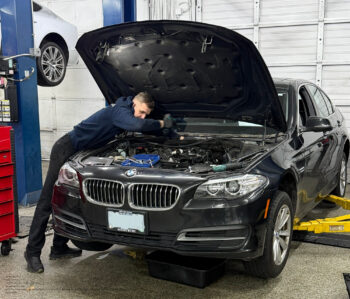
Some BMW engine problems produce noticeable symptoms before a major failure, while others develop with little obvious warning.
Common concerns that warrant further investigation include:
- Rattling during startup: An unusual metallic rattle, particularly around initial startup, may indicate a problem involving a timing component or another engine system.
- Persistent tapping or knocking: Repeated engine noises deserve attention, especially when they change with engine speed or operating temperature.
- Check engine lights: Certain faults involving camshaft timing, crankshaft correlation, or variable valve timing can indicate that further testing is necessary.
- Rough idling or inconsistent performance: Engine timing irregularities can contribute to drivability problems, although ignition, fuel, air intake, and other issues can cause similar symptoms.
- Loss of power: Changes in engine response may be associated with valve timing concerns or numerous other mechanical and electronic conditions.
Steve’s Imports specifically identifies timing chain slap, unfamiliar engine sounds, warning lights, and rough running as concerns its technicians encounter.
One important distinction is that these symptoms are not exclusive to timing chain problems. A BMW experiencing a rough idle and check engine light, for example, could have an ignition issue, an air intake problem, a sensor malfunction, or a mechanical timing concern.
Replacing a timing chain without confirming the actual cause could result in a costly repair that does not resolve the original complaint.
Want Expert BMW Diagnostic Services for Your Vehicle?
Contact Steve’s Imports today and let our experienced team help protect your BMW.
How Do Technicians Diagnose BMW Timing Chain and Valvetrain Problems?
Modern BMW engines generate diagnostic information that helps technicians evaluate how various mechanical and electronic systems are operating.
However, diagnostic equipment is only part of the process. Interpreting that information correctly requires an understanding of the vehicle’s engine design, operating conditions, and service history.
1. Reviewing Fault Codes and Freeze-Frame Data
A diagnostic evaluation may begin by retrieving stored fault codes from the vehicle’s control modules.
Some codes can indicate concerns involving camshaft timing, variable valve timing performance, or the relationship between crankshaft and camshaft signals.
Yet a fault code identifies an area requiring investigation rather than automatically identifying a failed part.
Technicians may also review freeze-frame data, which records certain operating conditions when a fault was detected. Depending on the vehicle, this information can provide useful context about engine speed, temperature, load, and other parameters.
Steve’s Imports emphasizes that fault codes should not be treated as automatic instructions to replace components. Its technicians have experience analyzing data blocks, freeze-frame information, and related faults to investigate what is actually happening within a vehicle.
2. Evaluating Camshaft Timing and Adaptation Data
Many BMW engines use electronically controlled systems that adjust valve timing in response to operating conditions.
Manufacturer-specific diagnostic software can provide access to certain timing-related measurements, adaptation information, and system operating data.
When supported by the particular engine and control system, technicians may compare requested and actual camshaft positions or evaluate how timing-control systems respond during operation.
Unexpected readings can help direct additional testing, but they do not independently establish that a timing chain is stretched or that a tensioner has failed.
The results must be interpreted using the procedures and specifications applicable to that BMW engine.
This is one reason manufacturer-specific software and experience with different BMW engine families are important.
3. Investigating Engine Noises
Mechanical noises can be valuable diagnostic clues, especially when technicians understand how different engines normally sound.
A brief startup rattle, persistent tapping, or unusual knocking may lead technicians to investigate lubrication, timing components, valvetrain operation, or other possible causes.
The sound’s location, frequency, duration, and relationship to engine speed or temperature may provide useful information.
At Steve’s Imports, experienced technicians draw on years of working with imported vehicles to recognize unusual engine sounds and interpret them alongside other diagnostic findings.
However, hearing a particular noise is not the same as confirming a failed component.
A proper evaluation may require additional testing or inspection before a repair recommendation can be made.
4. Checking Lubrication and Maintenance Conditions
Engine oil plays an important role in timing chain and valvetrain operation.
In addition to lubricating moving components, engine oil supports the operation of certain hydraulically controlled tensioners and variable valve timing systems.
Incorrect oil specifications, inadequate lubrication, oil pressure problems, or excessive contamination can contribute to engine concerns.
During an evaluation, technicians may consider the vehicle’s maintenance history, oil condition, warning indicators, and other findings relevant to the complaint.
Depending on the symptoms, further lubrication-system testing may be appropriate.
These observations can help determine whether a lubrication concern is contributing to unusual engine operation. They should not be confused with laboratory oil analysis or treated as definitive proof of internal timing-chain wear.
5. Confirming the Diagnosis Before Recommending Repairs
One of the most important steps is determining whether the evidence supports a specific mechanical or electronic failure.
A technician may find that symptoms originally suspected to involve the timing chain are caused by another component.
Alternatively, multiple problems may be contributing to the same complaint.
Steve’s Imports stresses the importance of duplicating the customer’s concern, investigating the relevant systems, and confirming the diagnosis before recommending replacement parts.
This approach helps avoid unnecessary repairs and allows customers to make decisions based on documented findings rather than assumptions.
Why Do BMW-Specific Diagnostic Tools Matter?
BMW engines and electronic systems have changed considerably across different generations.
The diagnostic procedures appropriate for an older BMW may be very different from those required for a newer turbocharged model with more sophisticated engine management systems.
Generic code readers can provide useful starting information, but they may not offer access to all manufacturer-specific diagnostic functions.
Steve’s Imports uses factory computers, manufacturer-specific software, and specialized tooling to service imported vehicles. According to the shop, it also maintains OEM software licensing for certain procedures that are not available to every independent repair facility.
These resources are particularly important when a repair requires programming, adaptations, or basic settings to be completed correctly.
The shop also emphasizes the importance of testing after repairs to confirm that the original concern has been addressed.
For BMW owners, this means the value of a diagnostic appointment extends beyond reading a fault code. The technician must understand what the information means, determine which tests are appropriate, and confirm the repair.
What Causes Timing Chain and Valvetrain Wear?
Timing chain and valvetrain problems can have several contributing factors, and their causes vary by engine design.
Some common considerations include:
Inconsistent oil maintenance: Delayed oil changes or oil that does not meet the manufacturer’s specifications can negatively affect lubrication and engine operation.
Mechanical wear: Chains, guides, tensioners, and related components experience mechanical loads throughout their operating lives. Wear characteristics differ among BMW engine families.
Lubrication system problems: Low oil pressure, inadequate oil supply, or other lubrication concerns can affect components that depend on consistent oil delivery.
Operating conditions: Repeated short trips, infrequent operation, and other driving patterns may influence oil condition and maintenance requirements.
Previous repairs or maintenance history: Incorrect repair procedures, overlooked related components, or unresolved engine problems may contribute to additional concerns.
Not every BMW engine experiences the same timing-related problems. The appropriate evaluation depends on the exact engine, symptoms, mileage, maintenance history, and applicable manufacturer information.
Can Early Diagnostics Prevent Expensive BMW Engine Repairs?
Early diagnosis can sometimes help prevent a developing issue from progressing into more extensive damage.
For example, identifying an abnormal engine noise or lubrication problem before a major mechanical failure may provide an opportunity to address the underlying concern.
However, timing chain failures cannot always be predicted, and not every problem can be prevented through routine maintenance or diagnostic testing.
The purpose of a diagnostic evaluation is to understand the current condition of the vehicle and determine what action is appropriate.
In some cases, a problem requires prompt repair. In others, additional testing or monitoring may be reasonable.
Steve’s Imports prioritizes safety concerns, problems that could cause catastrophic mechanical damage, conditions that could leave a vehicle unable to operate, and issues that may become more expensive if left unaddressed.
That distinction is important for BMW owners who want to maintain their vehicles responsibly without authorizing unnecessary work.
A good repair recommendation should explain what was found, why the repair is necessary, and whether alternative repair options are appropriate.
When Should BMW Owners Schedule an Engine Diagnostic Evaluation?
BMW owners should consider contacting a qualified repair shop when they notice an unfamiliar engine noise, persistent performance problem, or engine warning indicator.
A brief noise that disappears does not necessarily indicate a serious problem, but recurring or worsening symptoms should not be ignored.
Particular caution is warranted when a vehicle develops severe knocking, significant power loss, overheating, low oil pressure warnings, or persistent misfiring.
Depending on the symptoms, continued operation could cause additional damage. Drivers experiencing severe engine problems should stop in a safe location and contact a repair professional before continuing.
For less urgent concerns, providing the technician with detailed information can make the diagnostic process more effective.
Helpful information includes when the noise occurs, whether the engine is warm or cold, how frequently the problem happens, and whether warning lights or performance changes accompany it.
A vehicle’s maintenance and repair history can also provide valuable diagnostic context.
Why Accurate Diagnosis Matters More Than Guessing at Repairs
BMW owners often research symptoms online before scheduling service. While this can help them understand possible causes, similar symptoms can have very different explanations.
John at Steve’s Imports notes that customers sometimes arrive with repair requests based on automotive forums or online information that has not been verified through testing.
One recurring concern is replacing components based solely on a diagnostic code or suspected failure.
This approach can become expensive when the original problem remains unresolved.
The shop has encountered situations in which other repair facilities recommended major engine or transmission replacement, but the actual problem involved a more limited repair, such as a speed sensor or valve adjustment.
Those experiences illustrate why accurate diagnosis is especially important before authorizing extensive engine work.
For suspected timing chain or valvetrain problems, the same principle applies: technicians should evaluate the available evidence and confirm the cause before recommending significant repairs.
Why Choose Steve’s Imports for BMW Repair in Portland?
For approximately 50 years, Steve’s Imports has worked with imported vehicles, developing experience across BMW generations and other European and Asian makes.
The Portland shop combines manufacturer-specific diagnostic equipment, specialized tooling, and hands-on mechanical knowledge to investigate vehicle concerns.
Its approach emphasizes accurate diagnosis, clear communication, and repair recommendations based on the actual condition of the vehicle.
When appropriate, the team also considers alternative repair options that may be less expensive than replacing additional components unnecessarily.
Steve’s Imports understands that BMW owners want to know whether a repair is urgent, what it may cost, and whether the work will address the original problem.
By explaining diagnostic findings and confirming repairs, the shop helps customers make more informed decisions about maintaining their vehicles.
Schedule BMW Diagnostics in Portland
If your BMW is making an unfamiliar engine noise, displaying warning lights, or experiencing performance changes, Steve’s Imports can help evaluate the concern.
Contact Steve’s Imports to discuss your vehicle’s symptoms and arrange a diagnostic appointment before a potential problem develops further.
Steve’s Imports
7273 SE 92nd Ave
Portland, OR 97266
Phone: (503) 771-6701
FAQs About BMW Timing Chain Diagnostics
Connect With Us
Phone: (503) 771-6701
Location: 7273 SE 92nd Ave Portland, OR 97266